Use Area
01
Sanitaryware — Casting Slip / Body
Role / FunctionFlux, Thermal Shock Resistance
Key GradesMICRON TALC 45CR
Talc is widely used in ceramics as a fluxing and body-modifying material, especially in low-temperature and fast-firing bodies. Micron Talc 45CR improves thermal shock resistance, mechanical strength, and dimensional stability. Its lamellar structure aids work

Why Talc is the preferred choice for ceramic formulations
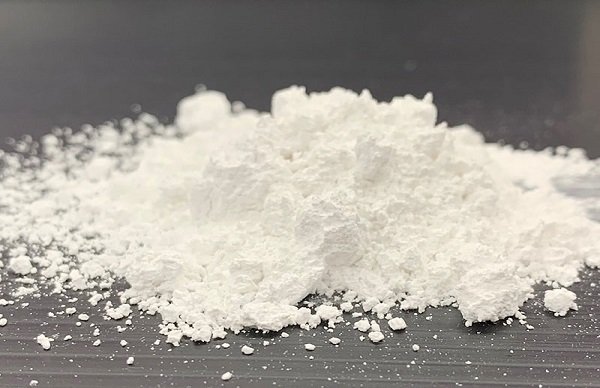 Performance engineered for Ceramic
Comprehensive range of Talc grades for diverse industrial applications
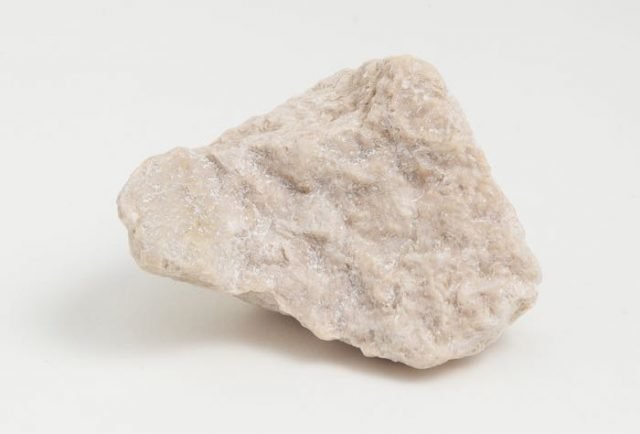
Controlled-particle-size talc grade (45 microns) for ceramic applications, providing a source of MgO that promotes stable glass phase formation, improves thermal shock resistance, enhances mechanical strength, and supports dimensional stability in fast-firing tile and sanitaryware bodies.
Application areas listed against Talc in the Ceramic application matrix
Role / FunctionFlux, Thermal Shock Resistance
Key GradesMICRON TALC 45CR

Role / FunctionFlux Aid, Dimensional Stability
Key GradesMICRON TALC 45CR

Role / FunctionFlux, Thermal Shock Resistance
Key GradesMICRON TALC 45CR

Role / FunctionFlux, Dimensional Stability
Key Grades—
Applications listed for Talc in the Ceramic product sheet
Our experts will guide you to the perfect talc solution
Other website markets with a verified Talc product-family listing
Common questions about Talc in ceramic applications
Talc is a fluxing and body-modifying material in ceramics. It provides MgO, which promotes the formation of a stable glass phase at lower temperatures, improves densification, and enhances thermal shock resistance and mechanical strength — particularly in fast-firing wall and floor tile bodies.
The MgO from talc promotes the formation of low-expansion crystalline phases (cordierite, enstatite) during firing, which reduce the overall thermal expansion coefficient of the ceramic body. This lower thermal expansion coefficient improves resistance to thermal shock — the ability to withstand sudden temperature changes.
Talc is most commonly used in wall and floor tile bodies (fast-firing formulations), sanitaryware, bone china tableware (where it enhances translucency), electrical insulators (steatite ceramics), and low-temperature specialty ceramics where its MgO flux content is most beneficial.
MICRON TALC 45CR is a 45-micron controlled-particle-size talc grade specifically developed for ceramic applications. Its controlled chemistry and particle size ensure consistent MgO delivery, uniform flux reactivity, and reliable performance in fast-firing tile and sanitaryware ceramic body formulations.
High-purity talc grades with controlled iron and chromium content do not adversely affect the firing whiteness of ceramic bodies. Impurity control is critical — iron contamination from lower-quality talc can cause grey or cream discolouration in white ceramics.
Yes. Talc's lamellar (plate-like) structure assists in workability and green body integrity during forming. It contributes to the orientation of clay particles during extrusion or pressing, which can improve green strength and reduce the tendency for cracking during drying.
Watch how 20 Microns' Talc supports real-world industrial applications.
 YouTube
Official Product Film
YouTube
Official Product Film
Partner with India's leading producer of industrial minerals for superior talc solutions