Use Area
01
Dusting Powders
Role / FunctionCarrier & Filler
Formulation TypesDP, WP, Bio-Pesticides
Talc is commonly used as a carrier and filler in agrochemical formulations due to its smooth texture, hydrophobic nature, platy structure, and chemical inertness. It improves the flow properties of powders and ensures uniform mixing of active ingredients. T...

Why Talc is the preferred choice for agro formulations
 Performance engineered for Agro
Comprehensive range of Talc grades for diverse industrial applications
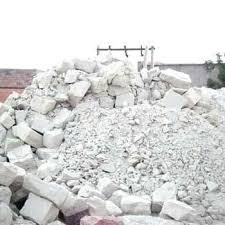
Engineered delaminated talc grade for agrochemical carrier applications, providing excellent flowability, platy particle orientation, and hydrophobic surface for effective active ingredient delivery.
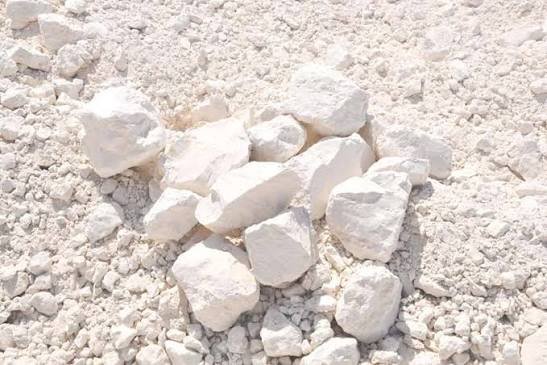
Agrochemical-grade talc with controlled particle size and purity for DP and WP formulations requiring consistent quality and reliable carrier performance.
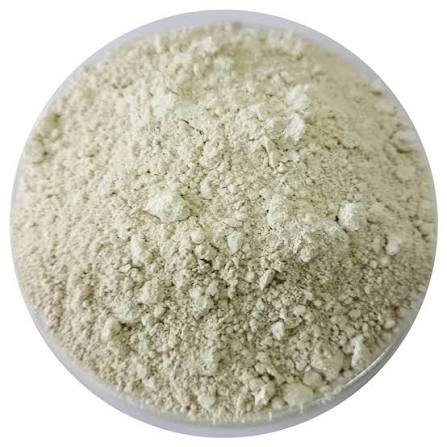
White talc grade offering enhanced whiteness and controlled particle size, ideal for WP and bio-pesticide formulations requiring aesthetic quality and inert carrier performance.
Anti-blocking white talc grade for agrochemical applications with improved free-flow, anti-caking, and carrier efficiency.
GLS-grade talc for agrochemical use, offering consistent particle size, purity, and hydrophobic characteristics for dusting powder and granular formulations.
Micronised soapstone (talc) grade for agrochemical and bio-pesticide applications where soft texture and hydrophobicity are required for effective crop surface spreading.
Application areas listed against Talc in the Agro application matrix
Role / FunctionCarrier & Filler
Formulation TypesDP, WP, Bio-Pesticides
Role / FunctionCarrier & Filler
Formulation TypesDP, WP, Bio-Pesticides
Applications listed for Talc in the Agro product sheet
Our experts will guide you to the perfect talc solution
Other website markets with a verified Talc product-family listing
Common questions about Talc in agro applications
Talc is preferred in bio-pesticide formulations because its platy structure, hydrophobic nature, and chemical inertness provide an ideal non-reactive surface for biological active ingredients. It does not interfere with microbial agents or botanical extracts, and its smooth texture aids in uniform coating and application.
Talc's plate-like particle structure creates a large surface area and overlapping layered coverage when applied to plant surfaces. This improves adhesion of the agrochemical film to leaf surfaces, reduces wash-off, and enhances the spreading efficiency of dusting powder formulations.
The Micron Talc ED series offers variations in particle size, whiteness, and surface treatment. ED A13 offers controlled purity; ED 4010 White provides enhanced whiteness; ED 4010 White AB includes anti-blocking treatment for improved flow. Each is optimised for specific DP, WP, or bio-pesticide formulation requirements.
Yes. Talc is widely used in bio-pesticide formulations because it is completely non-reactive, does not generate heat or acidic/alkaline conditions, and provides a stable, pH-neutral environment that supports the viability and shelf life of biological active ingredients.
Talc's platy particles and naturally hydrophobic surface create a lubrication effect between other powder particles, reducing inter-particle friction and static. This significantly improves flowability during mixing, filling, packaging, and application of agrochemical powder formulations.
Yes. Talc is used in seed coating and pelleting formulations as a carrier and flow aid. It provides a smooth coating surface, improves seed-to-seed separation, and acts as a carrier for fungicides and insecticides applied as seed treatments.
Watch how 20 Microns' Talc supports real-world industrial applications.
 YouTube
Official Product Film
YouTube
Official Product Film
Partner with India's leading producer of industrial minerals for superior talc solutions