Use Area
01
Sanitaryware — Casting Slip / Body
Role / FunctionMgO & CaO, Flux
Key GradesMICRON CARB DL
MICRON CARB DL dolomite is used in ceramics as a fluxing material and dual source of magnesium oxide (MgO) and calcium oxide (CaO). It is used in wall tiles, floor tiles, sanitaryware, and glaze formulations, playing a key role in optimising firing behaviour,

Why Dolomite is the preferred choice for ceramic formulations
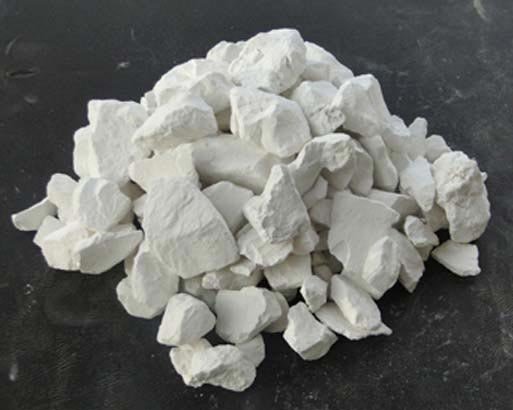 Performance engineered for Ceramic
Comprehensive range of Dolomite grades for diverse industrial applications
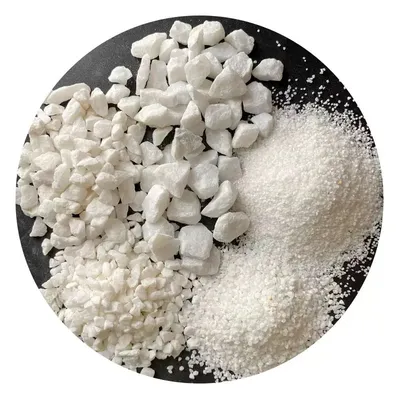
Controlled-quality dolomite grade providing a dual source of MgO and CaO for ceramic tile, sanitaryware, and glaze formulations. Optimises firing behaviour, improves thermal shock resistance, and enhances surface quality and overall ceramic body performance.
Application areas listed against Dolomite in the Ceramic application matrix
Role / FunctionMgO & CaO, Flux
Key GradesMICRON CARB DL

Role / FunctionMgO Source, Flux
Key Grades—

Role / FunctionMgO & CaO Flux
Key GradesMICRON CARB DL
Applications listed for Dolomite in the Ceramic product sheet
Our experts will guide you to the perfect dolomite solution
Common questions about Dolomite in ceramic applications
Dolomite serves as a flux and a dual source of MgO and CaO in ceramic tile bodies. During firing, it decomposes to release both oxides, which participate in glass phase formation, reduce the effective firing temperature, promote vitrification, and improve the thermal and mechanical properties of the tile.
MgO promotes the formation of a stable, low-viscosity glass phase at high temperatures, improving densification and reducing porosity. It also reduces the thermal expansion coefficient of the ceramic body, improving thermal shock resistance — particularly important for floor tiles and sanitaryware.
Calcium carbonate provides only CaO upon decomposition, while dolomite (CaMg(CO₃)₂) provides both CaO and MgO. The dual flux action of dolomite is preferred when both thermal shock resistance (from MgO) and vitrification (from CaO) are required in the same ceramic body formulation.
Dolomite begins decomposing between 700–900°C, releasing MgO and CaO progressively. MgCO₃ decomposes first (~750°C), followed by CaCO₃ (~850–900°C). This staged decomposition must be complete before the ceramic body reaches its peak densification temperature.
Yes. Dolomite is used in raw-batch glaze formulations as a source of both CaO and MgO flux. MgO in the glaze promotes matte or satin surface effects, improves chemical durability, and contributes to thermal expansion matching between glaze and body.
High-purity dolomite grades like MICRON CARB DL, with controlled iron and colouring impurity levels, do not adversely affect the whiteness or firing colour of ceramic bodies. Impurity control is essential to avoid discolouration in white or light-coloured tile and sanitaryware bodies.
Watch how 20 Microns' Dolomite supports real-world industrial applications.
 YouTube
Official Product Film
YouTube
Official Product Film
Partner with India's leading producer of industrial minerals for superior dolomite solutions