Use Area
01
Sanitaryware — Casting Slip / Body / Glaze
Role / FunctionCaO Source, Flux
Key GradesLIMESTONE POWDER POLYFIL
Calcium carbonate is widely used in ceramic applications as a flux and source of CaO. It helps reduce firing temperature, improve vitrification, and enhance strength and surface finish. During firing it decomposes to form lime (CaO) and CO₂, contributing to gl
Why Calcium Carbonate is the preferred choice for ceramic formulations
 Performance engineered for Ceramic
Comprehensive range of Calcium Carbonate grades for diverse industrial applications
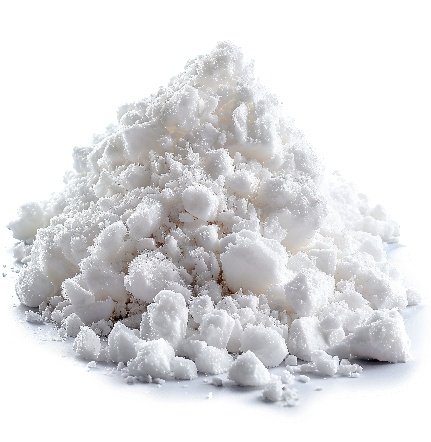
High-purity limestone (calcium carbonate) grade developed for ceramic body and glaze applications. Provides a consistent source of CaO upon firing, improving vitrification, strength, and surface finish in sanitaryware, tile, and tableware formulations.
Application areas listed against Calcium Carbonate in the Ceramic application matrix
Role / FunctionCaO Source, Flux
Key GradesLIMESTONE POWDER POLYFIL

Role / FunctionCaO Source, Sintering Aid
Key Grades—

Role / FunctionFlux, CaO Source
Key GradesLIMESTONE POWDER POLYFIL
Applications listed for Calcium Carbonate in the Ceramic product sheet
Our experts will guide you to the perfect calcium carbonate solution
Other website markets with a verified Calcium Carbonate product-family listing
Common questions about Calcium Carbonate in ceramic applications
Calcium carbonate acts as a flux by decomposing at firing temperatures to release CaO, which reacts with silica and alumina to form calcium silicate and aluminate glass phases. This promotes vitrification, reduces porosity, and improves the fired strength and surface quality of the ceramic body.
Calcium carbonate (CaCO₃) begins decomposing to CaO and CO₂ at approximately 750–900°C. In a ceramic body, this decomposition must be complete before the body sinters and densifies, which is why controlled particle size and distribution are important for consistent firing behaviour.
CaO from calcium carbonate contributes to the glass former in the glaze system, reducing surface tension during melt and promoting glaze spreading and smoothness. It helps achieve a glossy, even glaze surface while contributing to chemical durability of the glaze.
High purity is essential — particularly low levels of iron (Fe₂O₃), manganese (MnO), and other colouring impurities — to avoid discolouration of the fired ceramic body or glaze. LIMESTONE POWDER POLYFIL is specifically controlled for purity, whiteness, and particle size for ceramic applications.
Yes. CaO formed from calcium carbonate influences the thermal expansion coefficient of the ceramic body by forming calcium silicate phases during firing. Careful control of the CaO content helps match the thermal expansion of the body and glaze, preventing crazing or peeling of the glaze layer.
Yes. Calcium carbonate is used in raw-material batch glaze formulations as a source of CaO flux. It improves glaze melt fluidity, gloss, and chemical durability, and is particularly important in matte and satin glaze development.
Watch how 20 Microns' Calcium Carbonate supports real-world industrial applications.
 YouTube
Official Product Film
YouTube
Official Product Film
Partner with India's leading producer of industrial minerals for superior calcium carbonate solutions