Use Area
01
Drilling Mud (WBM
Role / FunctionHigh-Density Weighting Agent
Key GradesBarite API, Micron Barite OG1 / OG II / OG 6
Barite powder (natural barium sulphate – BaSO₄) is a critical weighting agent used in oil and gas drilling fluids to control formation pressure and prevent blowouts. Due to its high specific gravity, chemical inertness, and low solubility, it enhances drilling

Why Barite Powder is the preferred choice for oil & gas formulations
 Performance engineered for Oil & Gas
Comprehensive range of Barite Powder grades for diverse industrial applications

API 13A-compliant barite meeting the highest international standards for particle size, specific gravity (SG ≥ 4.2), and chemical purity for use as a primary weighting agent in all oil and gas drilling mud systems.
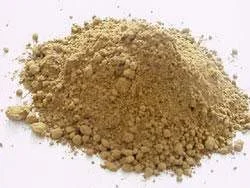
Engineered barite grade with controlled particle size distribution for optimised suspension performance in water-based and oil-based drilling mud systems, including offshore and HPHT drilling operations.
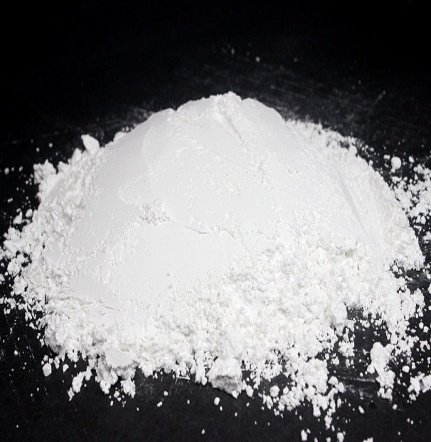
Enhanced barite grade for high-density mud applications requiring superior suspension characteristics and minimal settling in weighted drilling fluid systems under dynamic downhole conditions.

Specialty barite grade for specific drilling applications requiring precise particle size control for optimal weight distribution, suspension efficiency, and compatibility with complex mud systems.
Application areas listed against Barite Powder in the Oil & Gas application matrix
Role / FunctionHigh-Density Weighting Agent
Key GradesBarite API, Micron Barite OG1 / OG II / OG 6

Role / FunctionHigh-Density Weighting Agent
Key GradesBarite API, Micron Barite OG1 / OG II / OG 6

Role / FunctionHigh-Density Weighting Agent
Key GradesBarite API, Micron Barite OG1 / OG II / OG 6

Role / FunctionHigh-Density Weighting Agent
Key GradesBarite API, Micron Barite OG1 / OG II / OG 6
Applications listed for Barite Powder in the Oil & Gas product sheet
Our experts will guide you to the perfect barite powder solution
Common questions about Barite Powder in oil & gas applications
Barite (BaSO₄) is preferred because of its high specific gravity (4.2–4.5 g/cc), chemical inertness across all drilling fluid chemistries, low solubility in water and oil, and non-toxic nature. These properties allow it to increase mud density effectively without degrading drilling fluid performance or damaging formation productive zones.
Our API-grade barite has minimum specific gravity of 4.2 g/cc per API 13A requirements. Using barite, drilling mud density can be increased from water density (8.33 ppg) up to approximately 19–20 ppg, covering the full range of formation pressure control requirements in oil and gas drilling.
Barite particle size controls suspension efficiency, settlement rate, and mud density stability. API 13A specifies 97% of barite particles must pass through a 75µm sieve. Finer particles improve suspension but increase viscosity contribution. Our controlled PSD grades balance these properties for optimal downhole performance.
Barite itself is chemically inert, non-toxic, and does not bioaccumulate. However, disposal of barite-containing cuttings and drilling waste must comply with local environmental regulations, particularly for offshore operations.
API 13A grade barite meets American Petroleum Institute standards with specific gravity ≥4.2 g/cc, 75µm sieve residue ≤3%, and controlled soluble alkaline earth metals. OCMA grade meets equivalent European/international standards. Both are designed for drilling fluid use.
Barite's low hardness (Mohs 3–3.5) compared to formation minerals (quartz at Mohs 7) means barite particles cause significantly less abrasive wear to drill bits, mud pumps, pipe, and downhole tools compared to harder weighting agents like hematite (Mohs 5.5–6.5), reducing maintenance costs.
Watch how 20 Microns' Barite Powder supports real-world industrial applications.
 YouTube
Official Product Film
YouTube
Official Product Film
Partner with India's leading producer of industrial minerals for superior barite powder solutions